


As your moving company grows, daily operations become harder to manage. More jobs mean more calls, more crews, and more decisions. Tasks overlap. Roles are unclear. Manual work slows everything down. During peak season, these issues multiply fast. This is when you need to create an organizational structure for your moving business. Clear roles and defined processes help your team stay focused and accountable. Software also matters at this stage. The right system supports structure instead of adding confusion. MoversTech CRM for movers helps growing teams organize people, manage workflows, and keep operations under control as the business scales.
Why is it important to create an organizational structure for your moving business?
Many owners delay structure because things seem manageable at first. You may handle tasks yourself or rely on experience instead of rules. Still, if you want to create an organizational structure for your moving business, it helps to understand that structure already exists. Someone answers calls, and someone schedules crews. Someone handles issues when jobs change.
As your team grows, informal structure causes problems. New hires do not know who to ask. Tasks overlap, and responsibility becomes unclear. This leads to mistakes, slow decisions, and avoidable conflicts. A clear structure defines ownership, sets priorities, and removes guesswork from daily operations.
Tools also shape structure. Not everyone needs access to project management software for moving companies. Only people responsible for scheduling, crews, or jobs should use it daily. This creates clear responsibility lines, improves accountability, and prevents unnecessary access that can cause errors. When roles and tools align, work becomes easier, faster, and more consistent.

How to create an organizational structure for your moving business in five steps
Learning how to create an organizational structure for your moving business does not require complex planning. In most cases, you already see what works and what causes problems. The goal is to turn experience into a clear system your team can follow. Here’s what you need to do:
- Learn from the past
- Decide on the type of structure you want in your business
- Establish rules and guidelines
- Distribute the work optimally
- Make communication easy
Learn from the past
Your past jobs already show patterns that are easy to overlook during busy weeks. Look closely at moves that stayed on schedule and those that created stress. Identify what caused delays, rework, or customer complaints. Notice which teams worked efficiently and which combinations struggled. When you create an organizational structure for your moving business, these patterns give you real data. Many owners fix problems in the moment. The next step is documenting those fixes. Turn repeated decisions into standard steps so your team handles similar situations the same way every time.
Decide on the type of structure you want in your business
Every moving company operates under different conditions. Team size, job volume, service areas, and move types all influence structure. To create an organizational structure for your moving business, decide how work should flow from sales to completion. Many companies start by separating sales, operations, and admin. This keeps responsibilities clear. As demand grows, supervisors or team leads become necessary to reduce bottlenecks. A good structure supports growth without adding layers that slow decisions or block communication.
Establish rules and guidelines
Clear rules prevent small issues from turning into daily problems. When you create an organizational structure for your moving business, expectations must be written and shared. This includes job procedures, customer interaction standards, safety steps, and internal communication. New hires rely on guidance to perform well. Written guidelines reduce guesswork and ensure consistency across crews. They also make training easier and help managers correct issues based on clear standards instead of personal judgment.
Distribute the work optimally
Assigning roles requires more than reviewing experience. Communication style, patience, and decision making ability matter just as much. To create an organizational structure for your moving business, place people where their strengths fit the role. A skilled mover may struggle as a crew lead. When you find the right match, protect it. This is why it pays to invest in employee retention. Keeping trained staff reduces onboarding time, lowers costs, and stabilizes daily operations.
Make communication easy
Moving work depends on coordination and trust. Crews must communicate clearly to stay safe and efficient. When you create an organizational structure for your moving business, communication paths must be defined. Employees should know exactly who to contact for scheduling changes, job issues, or customer concerns. Shared tools and updated contact lists reduce delays. This supports creating a connected workforce and keeps jobs moving smoothly during high-volume periods.

How software supports your moving company’s organizational structure
When you create an organizational structure for your moving business, defined roles need system support. Without software, structure stays theoretical. Tasks are tracked manually. Updates depend on memory. This creates delays and missed details.
Dispatch and scheduling systems help structure work daily. Jobs go to the right crews. Crew assignment becomes clearer and more balanced. Managers see availability in real time. Reliable dispatching and operations tools reduce last-minute changes and improve control.
Sales also need structure. A clear process for inquiries and follow-ups keeps revenue predictable. A proper lead management system ensures every call and quote is tracked. This prevents lost leads and confusion between sales and operations.
Internal communication improves when everyone works on the same platform. Job costing tracks labor and margins. Document workflows store contracts and invoices in one place. All of this works best through moving company software built for movers, where the CRM acts as the central operational hub connecting every department.
How MoversTech CRM fits into your organizational structure
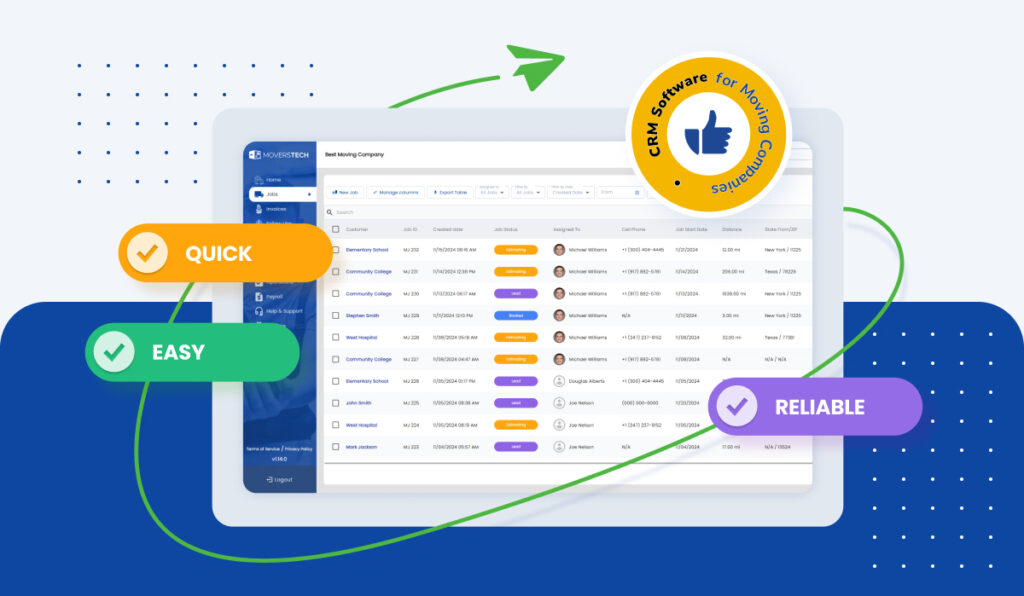
When you create an organizational structure for your moving business, clarity between teams matters as much as defined roles. A CRM supports that structure by keeping work visible, organized, and consistent across departments. Instead of scattered tools or manual tracking, one system connects people, tasks, and data. This reduces confusion during handoffs and keeps everyone aligned.
Here is how teams typically use one system in a structured operation:
- Sales manages inquiries, quotes, and follow-ups so leads move smoothly
- Operations handles dispatch, crew schedules, and job details
- Admin manages billing, invoices, and documents
- Management tracks performance, workload, and gaps using CRM for movers
This setup improves accountability across teams. Managers see where delays happen. Owners review results without chasing updates. As job volume grows, structure stays clear instead of breaking under pressure.

Connecting organizational structure to your moving company business plan
When you create an organizational structure for your moving business, you also strengthen your business plan. Structure shows how your company operates and how it plans to grow. Investors expect clear roles, reporting lines, and responsibility ownership.
A business plan without structure raises concerns. A clear structure shows how sales, operations, and admin work together. CRM and operational software support business plan execution by standardizing workflows, reducing role confusion, and improving accountability. This makes growth predictable instead of reactive.
Example organizational structure for a moving company
When you create an organizational structure for your moving business, a simple visual helps teams understand workflow quickly:
Owner → Sales → Dispatch → Movers → Admin → Customer support
Sales bring in jobs. Dispatch coordinates crews and schedules. Movers handle on-site work. Admin manages billing and documents. Customer support handles follow-ups. This structure is easy to explain and easy to scale.
Build a structure that grows with your moving business
To create an organizational structure for your moving business, you need clear roles, defined processes, and systems that support daily work. Structure helps teams move faster, reduce mistakes, and stay accountable as jobs increase. Software turns that structure into action. Want to build a more efficient moving team? MoversTech CRM helps you organize roles, automate workflows, improve communication, and run your moving business with clarity and confidence. Book a free demo and see how structure and software work together.
